
How to add vocals and voice words with Voice Memos Layered
Musicians, podcasters and narrators can now vocals and narratives of any voice notes and iPhone 16 Pro or iPhone 16 for Max.
Content musicians and content creators can now turn their iPhone 16 Pro or iPhone 16 for Max into a portable two -environment Recarde using a new layered recording function in voice notes. This feature, which was introduced in iOS 18.2, facilitates the addition of vocals, narration or harmony to the top of an existing note without external equipment or third parties.
Layered recording uses advanced A18 processing for chip to insulate voice from the playback sound, so you can purely record via the iPhone speakers. It’s a quick way to draw musical ideas, create a vote or practice timing with a layered sound, all from a single device.
How to add a second song in voice notes
The layered record is created directly to the Voice Memos on supported devices. You can add a second track without the need for additional equipment and the process takes just a few steps.
- Go to Voice Memos in the usefulness folder on your iPhone.
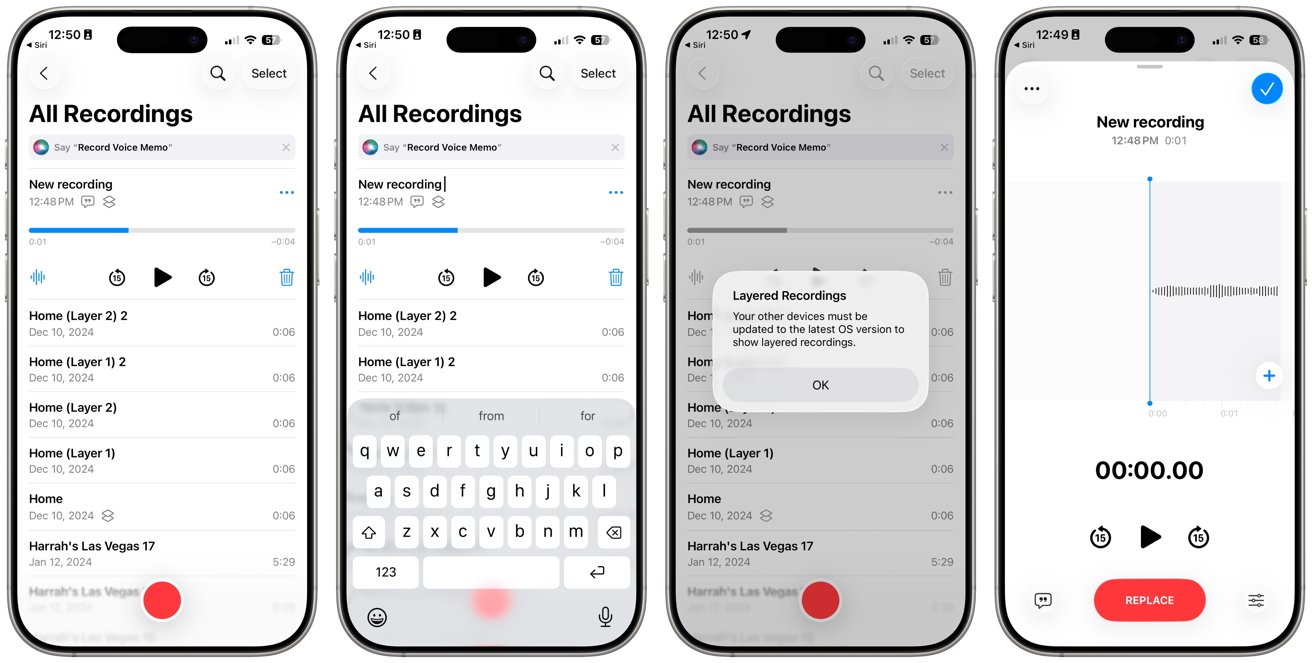
- In the list of recordings, click the recording you want to add a vocal layer, and then click the wave shape.
- Click the record button and then record the second layer.
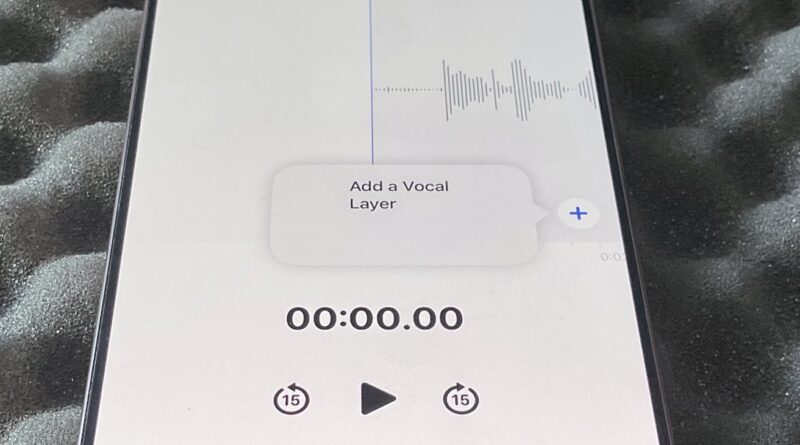
If you do this for the first time when you click on the course, iOS shows you a pop -up message next to the recording button and says, “Add a vocal layer.” For the first time you get a button.
The application will indicate a laminated icon note. The second track is always recorded in Mono, while the original can be stereo if allowed in the settings.

Left: Tap the wave shape on existing recording. Right: Click the red “2” button to start uploading a second track
Although this feature works without headphones, using AirPods or cable headphones can improve clarity by placing the sound outside the microphone.
Editing, sharing and mixing
After recording, you can fine the result in several ways.
- Go to Voice Memos in the usefulness folder on your iPhone.
- Click the layered record you want to mix.
- Click to view the wave shape, and then click Mix.
- Drag the layer of the layer mixture and mix the layers.
Layered notes are stored in QuickTime Audio (.QTA) format, which only works on iOS 18.2, iPados 18.2 or MacOS sequoia 15.2 or later. If you need to share a recording with someone on the old fabric, the most compatible option is separating the song.
- Go to Voice Memos in the usefulness folder on your iPhone.
- Click Options to view the course and click separate layers.
- Click to return to the list of recordings.
Both layers appear as separate records in the list. You can select, edit them and play separately.
Import layered recordings into a logical pro
If Voice Memos is turned on in the iCloud settings, you can open a layered record from your iPhone on the iPad where you signed the same Apple account. You can export the record to files.
You can then import a layered record to the Logic Pro Pro iPad for editing. Two layers are automatically opened as two different tracks in Logic for 11.1.1 or later.
Best use for a layered record
Layout recording in voice notes makes the iPhone surprisingly a versatile tool for creative and practical sound work. Musicians can quickly record vocals through instrumental composition, capture ideas for songs or harmony without needing studio software.
Loyed recording is built directly into the Voice Memos
Conceivublic, podcasters and content creators can add narratives to interviews, amber recordings or other sound clips and create layered segments with minimal effort. However, this feature automatically duck at one foot level, so the narrator would have to timing his speaking to avoid confusion of overlapping.
This feature is also used for practices and learning. Pupils of the language may record a phrase and then create their own response to progress monitoring or comparing pronunciation.
Storytels can combine background music with a spoken word and create absorbing sound clips in the application.
If you want to get the best results, start with clean, consist of the first recording. Allow a stereo recording in the settings if it is available because the second layer will be mono. During the Loyering process, use tools for a break and a CV to improve specific parts. After uploading, adjust the layer mixture and control the volume balance between the tracks.
If you want more control, you can export a layered note to Logic for 11.1 or later to MacOS Sequoia or Logic Pro for iPad 2.1 or later on iPados 18.2. The application will set up both songs separately, allowing advanced modifications, effects or other layers.
While Voice Memos supports only two songs to record, simplicity helps maintain files manageable and intuitive interface. For more complicated projects, you can go to applications like GarageBand or Logic Pro.
Know the restriction
Only iPhone 16 Pro and iPhone 16 Pro MAX supports a layered record. This feature does not appear on older iPhones, although they run iOS 18.2.
Each note supports a maximum of two layers and the second track is always mono. There are no possibilities to assemble effects or more trace mixing beyond the basic volume control.
Even with these limits, laminated voice notes offer a useful and portable way of experiment with sound. For musicians, content creators and students, they turn the iPhone into a simple but powerful two -wheel recarder that fits your pocket.