
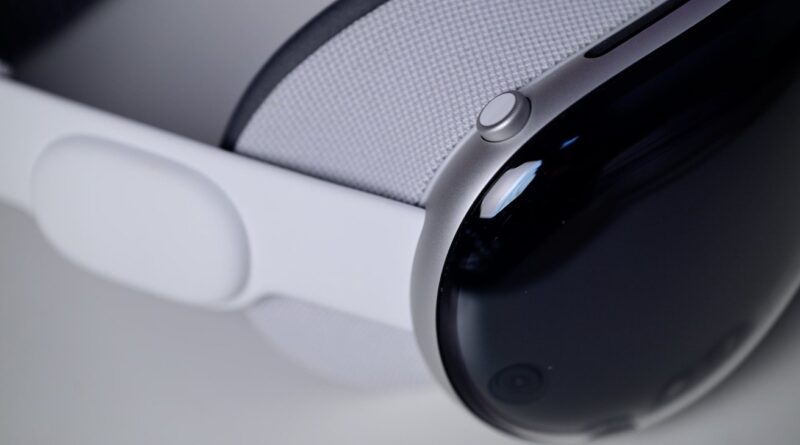
Apple Vision Pro is said to use the top 2nm process with the new R2 chip
Apple puts its new generation chip R2 based on the 2nm TSMC process into the future Apple Vision Pro, which makes the headset of the showcase for its most advanced silicon.
The company expands its chip strategy from phones and notebooks to headset. Apple Vision Pro, expensive niche device, gets a new R2 chip built on the 2nm TSMC process.
This movement signals Apple’s intention to make mixed reality proven soil for top silicon. The same supplier chain shows the iPhone 18 Pro and the MacBook M6 also receiving 2nm chips, but Apple Vision Pro will be the bravest test.
Apple’s Silicon Play
Apple has long considered chips to be its competition weapon. The processors of the series and the iPhone phones often overcome Android opponents, and the M series allow the Macs to free themselves from Intel.
Apple Vision faces a unique challenge because it must handle real -time rendering, high -resolution display and constant sensor input. It must do everything without quick battery cure, so the chip is more effective than at raw speed.
Apple is developing an internal chip R2 to get more control over performance, performance and design. In 2019, it lasted a similar approach when it reduced its reliance on Qualcomm.
Apple does not build its own chips. It binds to TSMC, the world’s leading foundry, which is preparing to increase the production of 2nm at the end of 2025.
Transistors 2nm process Usthes Gate-All-Around, bring about 15% more power or 30% less energy compared to 3nm. This results in a lighter battery and less heat on the Apple Vision Pro user.
Supply chain reports indicate that Apple Alreprey has ensured a large share of early capacity. TSMC spends 40,000 wafers per month and almost 100,000 in 2026 by the end of 2025.
This type of blocking leaves a small space for opponents.
Risks hiding under the hood
Early nodes of the process are rarely smooth and yields often suffer from many fairing tests. Let’s say 2nm wafers cost around 30,000 analysts, so every unsuccessful unit is exhausting.
This is a manageable risk in $ 1,000 iPhone, but it is harder to justify in a headset that costs over $ 3,000. Apple either has the costs and cropped the edges, or the Apple Vision prices for even more out of reach.
Apple was in a can to design chips that process the application for mixed reality, as well as for phones and laptops. If R2 Sunrels, Apple Vision Pro could be reminded less for immersion and more for overheating.
Wider strategy
Apple only relies on Apple Vision Pro. The iPhone 18 Pro is likely to be an A20 processor and is expected to have Apple’s C2 modem. It is expected that the MacBook M6, at any time that arrives, will also move to 2nm.
The company introduces all its devices to the same peak process to gain the benefits of performance and efficiency throughout the ecosystem. Apple’s approach builds the same type of momentum it had when you started the M1 MacBook.
TSMC is in the center of Apple’s plan and its success or failure in 2nm will affect the product line. Any disruption to Tai -wan could lead to a delay or lack of more flagships.
Apple has built its dominance by taking control of critical technologies. It was unfortunate with MP3 players or smartphones, but improved both categories until its production became standard.
iPhone 16 for max
The company brings modems, processors, and chips of headset to be less reliable on suppliers who, or even sue the license. Apple’s approach also maintains users within the ecosystem that competitors are fighting.
Apple can release the middle cycle update for Vision Pro at the end of 2025 with M4 or a possible M5 chip. Restoration would bring a headset to the Silicon Roadmap to match other Apple devices.
This could assure the buyer that the platform is still moving forward. The update is unlikely to be the main Leap Apple must justify the high price of the headset.
The real jump comes with R2, expected on the 2nm TSMC process in 2026. This chip is not just another processor upgrade, it is Apple’s attempt to prove that the mixed reality deserves its own cutting -off.
If R2 were released, Apple Vision Pro could finally justify its price and shake its blowing to a costly experiment. If this is not the case, the risks of the headset slide further into the edges of the Apple assembly.