
Today in Apple History: The iPhone is Coming – But It’s Not Made by Apple!
 December 18, 2006: Apple fans are mourning the death of the iPhone even before its launch. Linksys is starting to sell a new phone called the “iPhone,” and Cupertino watchers are having to deal with the fact that Apple’s smartphone probably won’t carry the name after all.
How did it happen? Linksys’ parent company, Cisco Systems, owns the iPhone trademark. While Apple previously released the iMac, iBook, iPod and iTunes, Cupertino did not own the name “iPhone”.
The new iPhone… from Linksys and Cisco?
Rumors about other The release of the iPhone took the internet by surprise. Before word spread that it was a Cisco device, many people speculated that Apple was debuting its smartphone out of the blue. A few days before Cisco’s announcement Gizmodo writer Brian Lam wrote that the iPhone would be announced on this day in 2006.
“I vouch for it,” read the cryptic article. “Not at all what I expected. And I’ve said too much already.”
Although fans expected an iPhone from Apple, most people thought the smartphone would debut in early 2007. (That’s exactly when Apple CEO Steve Jobs first showed off the company’s now-famous device.)
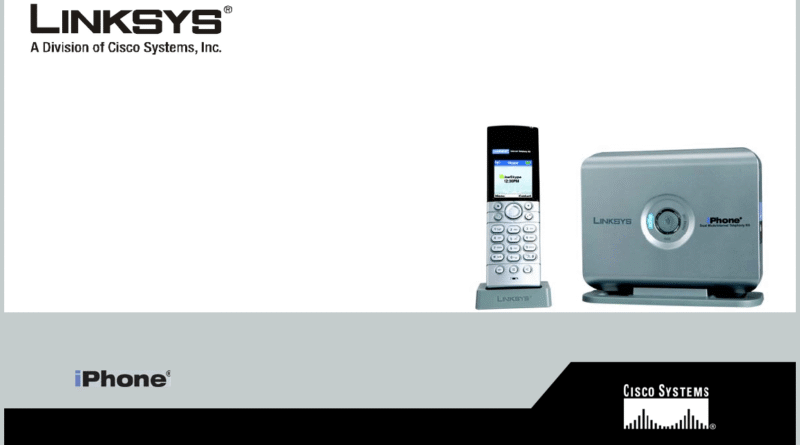
Confusingly, Cisco’s new Voice over Internet Protocol, or VoIP, phones were part of a family of Linksys devices labeled as iPhones, when they were actually called the CIT400 and WIP320. The $179.99 CIT400 was a cordless phone with a base station that connected directly via Ethernet to the network. The $199.99 WIP320, meanwhile, was Wi-Fi compatible. Skype was pre-installed in both.
Cisco iPhone: A Brief History featuring infoGear and Linksys
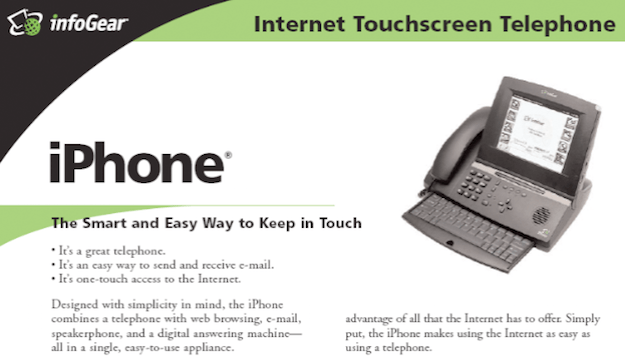
Photo: InfoGear
Cisco’s new Linksys iPhones weren’t really the very first iPhone too. In 1998, a company called InfoGear demonstrated a device called the “iPhone” at the Consumer Electronics Show in Las Vegas. Priced at $499 plus Internet access fees, the device very soon featured touch technology, visual voicemail, basic apps, and more. The company positioned the device to “coexist with computers the way a microwave oven coexists with a conventional oven.”
Unfortunately, despite the good reviews, iPhone InfoGear only sold around 100,000 units. Cisco acquired InfoGear along with the iPhone trademark in 2000.
With news of a new Linksys iPhone on December 18th, it seemed almost certain that Apple would have to find another name for its smartphone.
“If Apple is indeed developing a combined cell phone and music player, fans will have to adjust their expectations that the device probably won’t be called the iPhone,” Macworld wrote at the time. “According to the US Patent and Trademark Office, Cisco holds the trademark registration for ‘iPhone’.”
(The trouble with trademarking such iTitles may have something to do with Apple’s later decision to use “Apple Watch” rather than “iWatch” as the first wearable device.)
Apple’s dishonest tactics
As it turned out, Apple had something much more cheeky planned for the iPhone. Even though Cisco owns the name and Linksys released its iPhone, Apple still went ahead and introduced his own iPhone in January 2007. The next day, Cisco filed a lawsuit against Apple. As Adam Lashinsky revealed in his book Inside Apple:
“(Charles Giancarlo, Cisco’s chief executive at the time) got a call directly from Steve Jobs. ‘Steve called and said he wanted it,’ Giancarlo recalled. ‘He didn’t offer us anything for it. It was like a promise to be our best friend. And we said, ‘No, we plan to use it.’ Shortly thereafter, Apple’s legal department called.” brand,” meaning that, in Apple’s legal opinion, Cisco did not adequately protect its intellectual property rights by promoting the name….
The negotiation showed some of Steve Jobs’ classic negotiating tactics. Giancarlo said Jobs called him at home over dinner on Valentine’s Day because the two sides were arguing. Jobs spoke for a while, relative Giancarlo. “And then he said to me, ‘Can you get e-mail home?'” Giancarlo was taken back. It was, after all, 2007, when broadband Internet was ubiquitous in US homes, let alone a Silicon Valley executive who had worked in advanced Internet technology for years. “And he’s asking me if I can get e-mail home. You know he’s just trying to push my buttons — in the nicest way possible.” Cisco gave up the fight shortly after.
The Apple iPhone has become the most popular consumer electronics device of all time. However, the strange story of how Apple acquired the iPhone name from Cisco Systems was not the last tangle between the two companies.
Four years after the Linksys iPhone sparked Apple’s showdown with Cisco, Apple has repeated its somewhat awkward move. Apple “borrowed” another trademark owned by Cisco – the name “IOS” (which Cisco used for “Internet Operating System”). In compensation, Apple and Cisco said they would team up to “explore opportunities for interoperability”, although this never happened.
