

I just bought an M4 iPad Pro. Here’s why the M5 doesn’t appeal to me
While the rest of the world was waiting for the M5 iPad Pro earlier this month, I decided to buy the M4 iPad Pro, just days before Apple dropped its big M5 announcement. Yes, I knew the M5 iPad Pro was coming. But the deal I got on the previous generation model was compelling enough that I didn’t hesitate.
When the M5 arrived last week, I was still in my comeback. However, after researching what’s new on the new iPad Pro, I’ve come to the conclusion that going for the M5 isn’t as easy as it seems. In fact, I’m here to argue that buying the M4 version now might be a smarter move if you want to save some money. And if you already have an M4 iPad Pro, you shouldn’t worry about buying a new one.
For context, I replaced the M2 with an iPad Pro with 128GB of storage, which was more than enough for what I do with my iPad (usually watching videos, browsing the web, and writing articles). I wasn’t really thinking about upgrading, but I couldn’t pass up a good opportunity to upgrade.
I found a good deal on a basic M4 iPad Pro with 256GB storage, so I sold my old iPad and bought the M4 for a small price difference. I could wait a few more weeks to buy the new M5 iPad Pro, but would it make a huge difference? Not really – and here’s why.

The M4 iPad Pro is fast enough for all kinds of tasks, including high-end games.
Foundry
Same design, same display, same iPad experience
In terms of design, if you compare the two models side by side, you will be hard pressed to find any differences. Aside from the fact that the M5 version no longer has “iPad Pro” written on the back, the M5 iPad Pro retains the same ultra-slim design that was introduced with last year’s M4 model.
Both versions have exactly the same dimensions, weight and thickness. But those aren’t the only things they have in common.
The M4 iPad Pro was the first to include a Tandem OLED display, which reaches a maximum brightness of up to 1600 nits when displaying HDR content. It’s an incredible display and I love it. Guess what? The M5 iPad Pro has the same panel as last year’s model.
The cameras on the iPad Pro M4 and M5 are also the same. You get a 12MP wide-angle lens on the back and a 12MP ultra-wide-angle camera with a central hub on the front, no matter which iPad you choose. The M5 version was rumored to get two front-facing cameras for a better experience in different orientations, but Apple seems to have scrapped that idea.
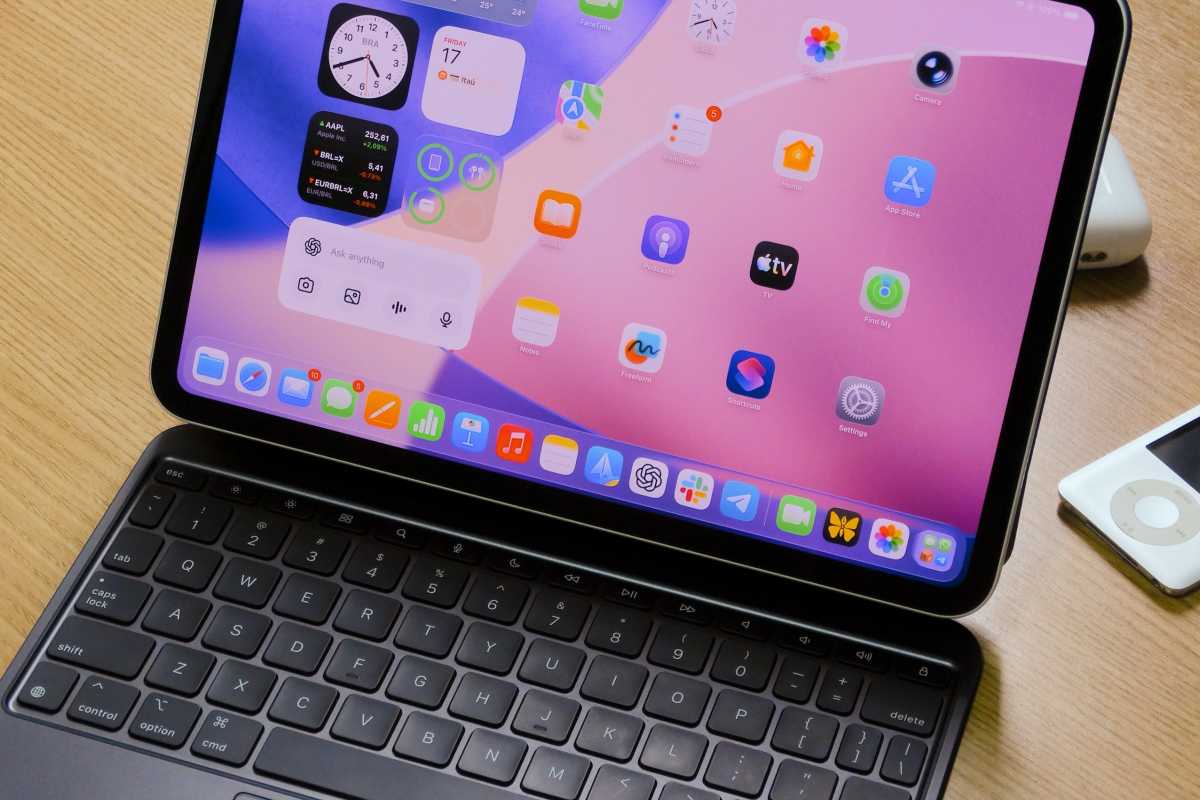
The iPad M4 has the same design as the M5, so it works with the same accessories.
Foundry
Since the design is the same, Apple hasn’t updated any of its accessories for the new M5 iPad Pro either. This means you can have the same experience with the M4 iPad Pro by pairing it with the same Magic Keyboard and Apple Pencil Pro.
In fact, the Magic Keyboard was one of the reasons I considered upgrading from the older M2 iPad Pro. The improved angle adjustment, more premium aluminum finish and functional keys really make a difference. And I didn’t have to buy this year’s model to get it all.
What else is the same? The same 10-hour battery life, the same four built-in speakers (which are also pretty good), and the same USB-C port with Thunderbolt 4 support.
What’s actually new with the M5 iPad Pro?
Okay, so there must be something new in this year’s iPad Pro, right?
The first and most obvious change is the chip. This year’s iPad Pro is one of the first Apple products to receive the M5 chip, and it comes with some interesting improvements. Apple says the new GPU offers up to 45 percent more performance compared to the M4, while the M5 also has an improved Neural Engine to handle AI-based tasks.

The M5 iPad Pro is definitely faster than the M4, but most users won’t know the difference.
Foundry
Based on our testing on a MacBook Pro, the M5 really is a massive improvement on the graphics front. As for the CPU, the M5 chip is only 15 percent faster than the M4.
To be honest, my M2 iPad Pro already felt fast enough for almost everything from basic tasks to casual gaming. The M4 chip makes everything even smarter. I doubt most users would notice a performance difference between the M4 and M5 chips in their day-to-day use.
Another difference between the M4 and M5 iPad Pro is that this year’s models start with 12GB of RAM and go up to 16GB of RAM in the 1TB and 2TB storage versions. Previously, the 256GB and 512GB models only had 8GB of RAM.
These improvements certainly make a difference if you plan to play AAA games or run local AI models on your iPad. Beyond that, though, there aren’t many iPadOS apps that take advantage of such hardware. The M4 iPad Pro is still able to handle everything without a problem.
Apple has also improved the connectivity of the new iPad Pro. This year’s models come with the Apple-designed N1 chip introduced with the iPhone 17 models. The chip enables Wi-Fi 7 and Bluetooth 6, while last year’s iPad still runs on Wi-Fi 6E and Bluetooth 5.3.
Wi-Fi 7 is certainly a big step up from Wi-Fi 6E and offers much higher theoretical speeds. But if you don’t have a Wi-Fi 7 setup at home (which is my case), it won’t make any difference yet. Also, there aren’t many Bluetooth 6 compatible accessories on the market yet.
Those who opt for the Cellular version of the M5 iPad Pro may notice a big upgrade, as Apple has thrown in its own 5G modem (called the C1X). Again, we have to wait for real-world testing, but Apple says the new modem supports speeds up to 50 percent faster on 5G and also uses less power.
Another minor difference is the support for external monitors with a refresh rate of 120Hz. I currently have a Studio Display that is limited to 60Hz, so that’s another thing I don’t have to worry about yet. Oh, and the new M5 iPad Pro supports fast charging to 50 percent in just 30 minutes, but it’s not like the charging speed of the M4 version bothers me.
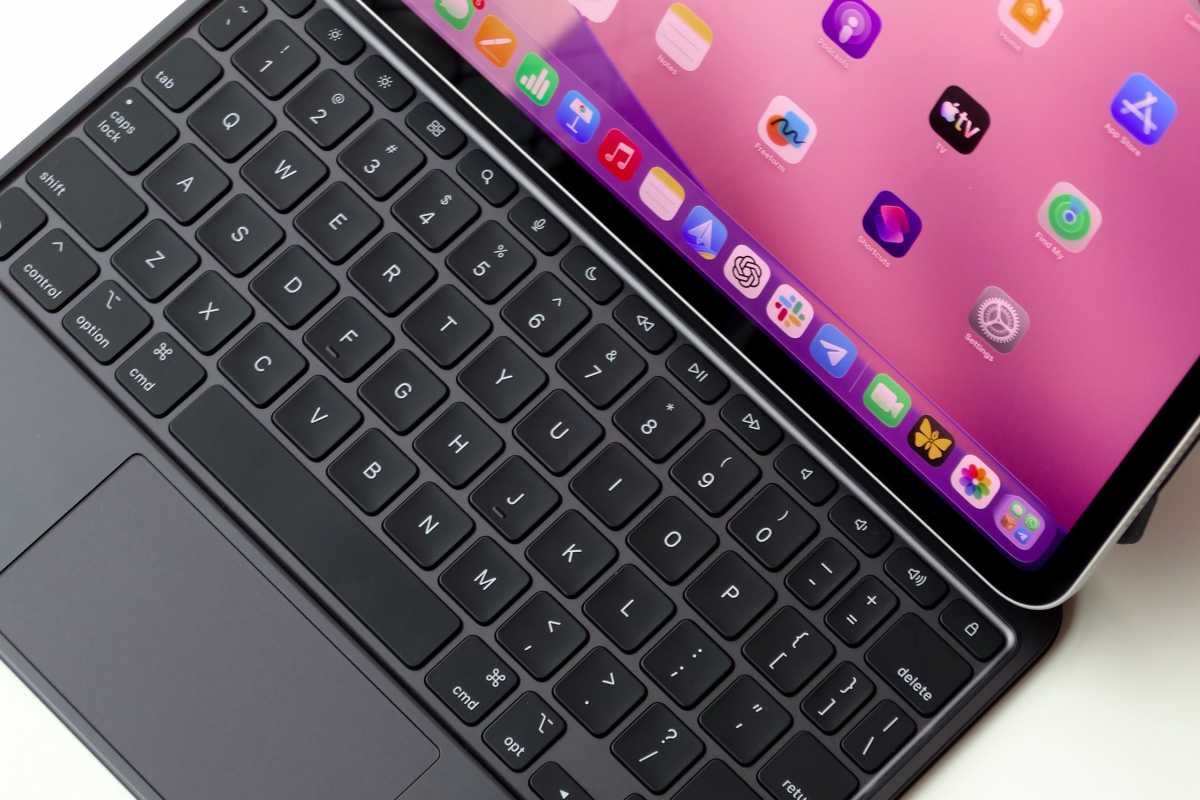
The M4 iPad Pro display is identical to the M5 model.
Foundry
Why I stick with the M4
When I use my M4 iPad Pro, I don’t feel the need for more performance than it already offers. That alone makes me feel more comfortable not being tempted by the M5. And since both models have the same design and accessories, I don’t feel like I’m missing out on anything.
If you plan to use your iPad to run heavy AI generative tasks, do constant 3D rendering, or play console-level games like Resident Evil 4, the new M5 iPad Pro might be the best choice for you.
Otherwise, if you already have an M4 iPad Pro or want to buy a new iPad without spending too much money, last year’s model is still very solid and more than enough for most people. I recommend looking for deals on Amazon or even buying a refurbished model.
Having the latest technology is certainly tempting, but it’s worth considering whether you really need the latest and greatest.